

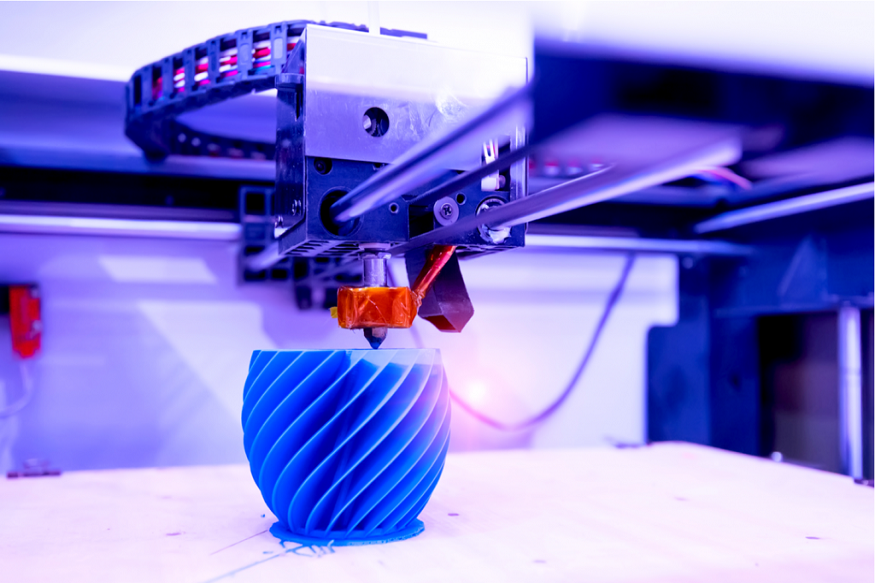
Industrial additive manufacturing has transitioned from a niche prototyping tool into a core production technology across multiple verticals. For businesses operating in South East Queensland, access to professional 3D printing Brisbane services now means access to technologies that were, until recently, the exclusive domain of multinational OEMs. From FDM and SLA to SLS and metal sintering, local operators now offer end-to-end 3D printing solutions that compress product development cycles, reduce tooling costs, and enable geometries that are simply not achievable through conventional subtractive manufacturing.
This article explores the key industries actively leveraging 3D print Brisbane capabilities, the specific technical applications within each sector, and the material and process considerations that inform industrial-grade output. Whether you are evaluating a 3D printing service for rapid prototyping or planning to integrate additive manufacturing into your production workflow, understanding which industries are at the forefront of adoption provides valuable benchmarking context.
Industry Overview: 3D Printing Applications in Brisbane
The following table summarises the major industries engaging with 3D printing service Brisbane providers, alongside their primary applications, preferred materials, and the principal technical benefit each sector derives from additive manufacturing.
| Industry | Primary Application | Common Materials | Key Benefit |
| Aerospace & Defence | Structural brackets, ducts, tooling jigs | ULTEM, titanium, carbon fibre PA | Weight reduction, part consolidation |
| Medical & Healthcare | Surgical guides, prosthetics, implants | Medical-grade resins, titanium | Patient-specific customisation |
| Mining & Resources | Replacement parts, housings, test fixtures | Nylon PA12, ABS, PETG | Rapid on-site replacement |
| Architecture & Construction | Scale models, facades, bespoke components | PLA, resin, concrete composites | Complex geometry, faster prototyping |
| Education & Research | Teaching aids, lab equipment, prototypes | PLA, resin, flexible TPU | Low-cost iteration and discovery |
| Automotive | Concept models, jigs, end-use brackets | ABS, ASA, carbon fibre PA | Shortened development cycles |
| Marine & Energy | Impellers, housings, maintenance parts | Glass-filled nylon, ASA | Corrosion resistance, fast lead times |
1. Aerospace and Defence
Technical Applications and Process Requirements
Aerospace remains one of the most demanding environments for any manufactured component. Structural integrity, dimensional accuracy, and material certifiability are non-negotiable. Brisbane’s proximity to several defence contractors and MRO (Maintenance, Repair and Overhaul) facilities has created sustained demand for a 3D printing service capable of producing parts to AS9100 and NADCAP-adjacent quality standards.
Specific applications within this sector include:
- Interior non-structural brackets, ducting, and cable management systems produced in ULTEM 9085, a flame-retardant, high-performance thermoplastic rated to FAR 25.853
- Tooling jigs and fixtures used for assembly line operations, eliminating the need for costly CNC-machined aluminium alternatives
- Low-volume replacement components for legacy aircraft where OEM tooling no longer exists
- Functional prototypes for aerodynamic testing and wind tunnel evaluation
From a process standpoint, FDM with high-performance filaments and selective laser sintering (SLS) with glass-filled or carbon-filled polyamides are the dominant technologies. Metal 3D printing via DMLS (Direct Metal Laser Sintering) is increasingly used for titanium alloy structural inserts where weight-to-strength ratios are critical.
Local 3D printing solutions providers offering aerospace-compliant workflows typically maintain strict material traceability documentation, print parameter logs, and post-processing records — all essential for regulatory submissions and airworthiness signoffs.
2. Medical and Healthcare
Patient-Specific Manufacturing and Clinical Tooling
Additive manufacturing’s capacity to produce one-off, highly customised components at no additional cost premium over batch production makes it uniquely suited to the medical sector. Brisbane’s healthcare ecosystem — anchored by facilities such as the Royal Brisbane and Women’s Hospital, Mater Hospital, and Queensland Children’s Hospital — generates ongoing demand for precision medical components that interact directly with patients or with sterile surgical fields.
Key clinical and operational applications include:
- Anatomical models for pre-surgical planning, created from DICOM data sets exported directly from CT and MRI scans, and printed in multi-material or full-colour resin
- Patient-matched surgical guides for orthopaedic procedures, including knee and hip arthroplasty, where accurate bone cut angles reduce operative time and improve implant alignment
- Custom prosthetics and orthotic devices manufactured in flexible TPU or semi-rigid nylon PA12, tailored to individual patient anatomy
- Laboratory and biomedical research equipment, including custom cell culture holders, microfluidic channels, and housing components for diagnostic devices
From a regulatory perspective, any 3D print Brisbane component that contacts the patient or enters a sterile environment must be produced from biocompatible materials compliant with ISO 10993. Post-processing steps such as vapour smoothing, electropolishing, or validated sterilisation cycles are part of a compliant 3D printing solutions workflow for this sector.
3. Mining and Resources
On-Demand Parts Supply in Remote and Semi-Remote Operations
Queensland’s mining and resources sector represents one of the most significant economic drivers in the state. Mining operations across Queensland often face costly equipment downtime due to unavailable spare parts, especially for older machinery no longer supported by the original manufacturer.
A responsive 3D printing service Brisbane provider can compress lead times for non-safety-critical components from weeks to hours. Common mining and resources applications include:
- Replacement housings, end caps, and covers for instrumentation and electrical junction boxes
- Custom cable glands and conduit fittings for non-standard bore sizes
- Wear-resistant liners and guides produced in abrasion-resistant polymers such as nylon PA12 GF or UHMWPE composite filaments
- Prototyping and testing of revised component geometries prior to commissioning full tooling from a casting or machining supplier
The critical technical consideration in this sector is environmental durability. Components must withstand UV exposure, chemical splash, vibration, and temperature cycling. Material selection typically centres on UV-stable ASA, glass-filled polyamide, or PETG with appropriate infill density and wall thickness specifications to meet load-bearing requirements. For underground mining environments, flame-retardant polymer grades and anti-static formulations are mandatory.
4. Architecture and Construction
Scale Modelling, Complex Facades, and Bespoke Building Elements
Brisbane’s construction sector, supported by major infrastructure projects ahead of the 2032 Olympic and Paralympic Games, is driving increased demand for architectural 3D printing solutions. Design firms, urban planners, and structural engineers routinely engage 3D printing service Brisbane providers to produce high-fidelity scale models, structural visualisation tools, and in some cases, functional architectural elements.
Applications within the architecture and construction vertical include:
- Detailed 1:100 and 1:200 scale architectural models for client presentations and planning authority submissions, produced in high-resolution SLA or DLP resin with fine surface detail
- Facade components and decorative cladding panels featuring complex geometric or organic surface treatments that would be prohibitively expensive to produce via conventional formwork or CNC routing
- Custom joinery fittings, architrave details, and hardware components for heritage restoration or bespoke residential projects
- Structural node connectors and space frame junction components used in temporary or permanent lightweight structures
Concrete 3D printing is an emerging sub-sector within this space globally, and while full-scale structural concrete printing remains at a research and pilot phase in Australia, local providers offer fibre-reinforced composite and cementitious material printing for smaller architectural elements. More commonly, 3D print Brisbane services support the construction industry through polymer prototype and component production that feeds into the broader design and approval workflow.
5. Education and Research Institutions
Prototyping Infrastructure for Universities and Research Centres
Brisbane hosts a concentration of high-calibre research and tertiary education institutions, including the University of Queensland, Queensland University of Technology (QUT), and Griffith University. Each of these institutions maintains active research programmes across engineering, biomedicine, environmental science, and advanced materials — all of which generate demand for accessible, cost-effective 3D printing solutions.
Within the academic and research context, 3D printing service providers supply:
- Custom laboratory components including sensor mounts, fluid cell housings, reaction vessel adapters, and spectroscopy sample holders
- Teaching aids and anatomical or mechanical demonstration models that provide tactile learning value beyond digital simulation
- Functional prototypes for student capstone and postgraduate research projects, enabling rapid iteration at a fraction of the cost of machined alternatives
- Specialist research instrumentation components with tight dimensional tolerances, particularly in materials science, robotics, and biomedical engineering research
The educational sector’s demand profile is characterised by smaller batch sizes, greater material diversity, and a higher tolerance for surface finish imperfection compared to commercial production runs. This makes it well-suited to FDM and resin-based desktop-class 3D printing services operating alongside industrial-grade bureaus.
6. Automotive and Motorsport
Prototype Development and Low-Volume Production Components
Queensland’s automotive aftermarket and motorsport sector has historically been a strong adopter of additive manufacturing for both prototype development and low-volume functional part production. From club-level motorsport to professional racing programmes operating at Ipswich’s Queensland Raceway or the Townsville 500 circuit, teams leverage 3D print Brisbane capabilities for aerodynamic development, weight optimisation, and rapid turnaround of bespoke components.
Automotive and motorsport applications include:
- CFD-validated aerodynamic components including diffusers, splitters, and duct elements printed in high-temperature ABS or ASA for track testing prior to carbon fibre layup
- Custom interior trim, switch surrounds, and dashboard inserts produced in fine-detail FDM or SLA for both functional testing and finished vehicle presentation
- Engine bay brackets, coolant line supports, and heat shield components in high-temperature-resistant polymers such as PEEK or Nylon PA6-CF
- Assembly jigs and alignment fixtures used in vehicle modification and customisation workshops
The automotive sector increasingly uses 3D printing solutions not only in R&D but also in aftersales and restoration, where discontinued OEM parts can be reverse-engineered and reproduced using structured light scanning combined with additive manufacturing output.
7. Marine and Energy
Corrosion-Resistant Components and Maintenance Parts
Brisbane’s position as a major port city and gateway to the Queensland coast creates sustained demand from the marine industry for replacement components and custom fabrications that must perform in high-humidity, salt-laden environments. The energy sector — spanning coal seam gas, renewable energy installation, and grid infrastructure — similarly benefits from on-demand additive manufacturing for maintenance, repair, and operations (MRO) applications.
Marine and energy sector applications include:
- Impeller housings, pump bodies, and fluid control components produced in glass-filled nylon or PETG for resistance to salt water and chemical cleaning agents
- Navigation equipment housings, electronics enclosures, and cable management systems for vessel fit-outs and refits
- Wind turbine component prototypes and small-batch replacement parts for solar mounting system hardware
- Custom pipe spacers, gland seals, and conduit adaptors for subsea or tidal monitoring equipment
ASA (Acrylonitrile Styrene Acrylate) is particularly prevalent in outdoor marine and energy applications due to its superior UV resistance compared to standard ABS, maintaining mechanical properties and colour stability under prolonged Queensland sun exposure.
Read More: Steven Rindner Discusses the Gravel Biking Experiences to Enjoy Across the United States
Choosing the Right 3D Printing Service in Brisbane
With multiple 3D printing service Brisbane providers operating across the city, selecting the right partner requires evaluation across several technical and commercial dimensions:
- Technology range: Does the provider offer FDM, SLA/DLP, SLS, and metal printing, or are they limited to a single process?
- Material breadth: Can the service accommodate engineering-grade materials such as PEEK, ULTEM, CF-filled nylons, and medical-grade resins?
- Post-processing capability: Are secondary operations such as vapour smoothing, painting, tapping, heat-set inserts, and dyeing available in-house?
- Quality assurance: Does the provider maintain dimensional inspection reports, material certifications, and print parameter traceability?
- Lead times and scalability: Can the provider scale from single prototype units to low-volume production runs without significant lead time penalties?
A comprehensive 3D printing solutions partner will provide design-for-additive-manufacturing (DfAM) consultation as part of the service offering, helping clients optimise geometry for printability, reduce material consumption, and select the most appropriate process and material for their specific application requirements.
Conclusion
Industrial 3D printing in Brisbane has reached a level of technical maturity and service availability that makes it a viable, often superior, alternative to traditional manufacturing for a wide range of applications across aerospace, medical, mining, architecture, education, automotive, and marine sectors. The combination of advanced process technologies, engineering-grade materials, and experienced local operators means that both the prototyping and production applications of additive manufacturing are now well within reach for Brisbane-based businesses of all sizes.
As demand for shorter lead times, greater design freedom, and more sustainable production methods continues to grow, the role of 3D printing service Brisbane providers will only expand. Organisations that invest in understanding and integrating these 3D printing solutions into their engineering and manufacturing workflows today will be better positioned to compete in an increasingly agile industrial landscape.





Leave a Reply